
Faces of the Ranch: Kate Langen
In celebration of Ranch Ehrlo’s 60th anniversary, we are reflecting on the people who make our work possible each day – introducing you to individuals who have grown alongside us and who carry our mission forward. Our summer series will introduce audiences to the people who have helped shape the legacy that defines Ranch Ehrlo.
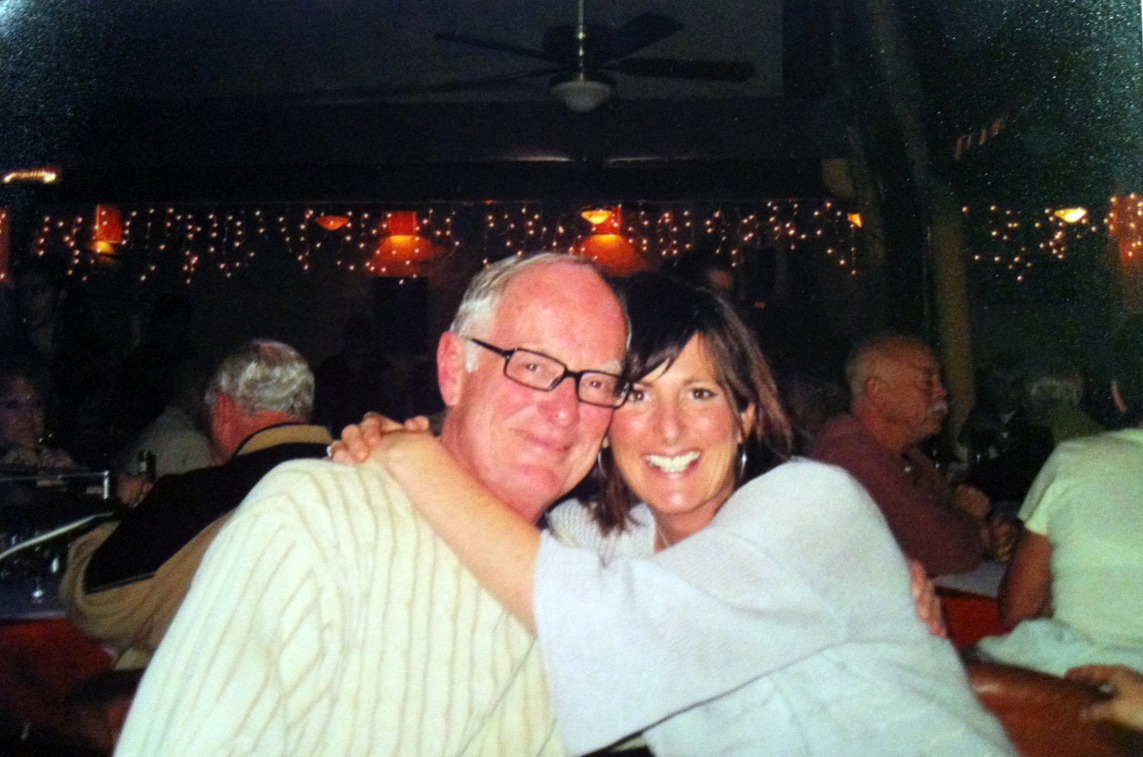
To begin the series, we start where the apple didn’t fall far from the tree. We will introduce Kate Langen, director of the Treatment Foster Care program at Ranch Ehrlo, and daughter of the organization’s founder, the late Dr. Geoff Pawson.
“Ranch Ehrlo was always front and centre for my dad. And so, if you’re going to be that type of leader, you have to incorporate your children in your work,” Kate shared. “My very first memory of Ranch Ehrlo is being about four years old in the Old Mitchell House, on Pilot Butte campus, learning to tie my shoes in the doorway of dad’s office.”
Among his four children, Kate was the one who followed in her father’s footsteps. She began working at Ranch Ehrlo as a casual youth care worker, later earning her Bachelor of Social Work and then her master’s degree. During a practicum placement in Saint Vincent and the Grenadines, Kate received a letter from Geoff sharing that Ranch Ehrlo’s clinical services were expanding and that a caseworker position would be opening soon.
“I told him he knew where I stood on this – I didn’t want to be the coach’s kid. I was considering other options. Sure enough, I started at the Ranch on September 17, 1991,” she said with a laugh, as if fate had settled long before.
After moving into a full-time caseworker role supporting group living programs for over a decade, Kate transitioned to Ehrlo Counselling. After Geoff’s passing, she took on the role of director of clinical services, and today, serves as director of Treatment Foster Care.
Kate carries the lessons her father taught her, along with everything she absorbed by watching how he led, innovated, and lived his values every day.
Reflecting on his legacy, Kate shares how her father’s guidance didn’t just shape her career but also her worldview:
He taught me to be “all in.” He showed me that real impact comes from full commitment, not just to the work itself, but to the children, families, and teams who rely on you.
He grounded leadership in family values. He believed that you take care of your own family, and that presence matters, beyond office hours.
He lived “leaders eat last”. I watched my dad at every staff event – rarely sitting down, moving from table to table, making sure every single person felt seen, valued, and important. He took the time to know staff, their partners, and their children.
He challenged me to take risks and reject mediocrity. The status quo was never enough. He pushed for bold thinking, creativity, and innovation – always asking how we could do better, reach further, and fill gaps in meaningful ways. When people feel ownership and purpose, they rise with you.
He showed me it’s okay to stand alone. He modelled the courage to have difficult conversations, share differing opinions, and to hold firm to values, even when it meant going against the grain.
He instilled a deep commitment to lifelong learning. Education wasn’t optional, but foundational. He believed in innovation. Conferences, forums, committees, boards, and signature events weren’t only about visibility but learning, sharing, and inspiring others to “catch the vision”. A highly qualified and educated staff was integral.
He embedded continuous quality improvement into everything. Reaching a goal was never the end, it was the beginning of the next three. He cultivated a mindset of constant growth, encouraging teams to keep learning, evolving, and striving for better.
He taught me that problem-solving is at the heart of this work. He leaned into complexity and adversity with determination and creativity. Every child, every family, every situation is worthy of that level of commitment.
He modelled honesty, integrity, and transparency. He never wavered from these values. Mistakes were acknowledged, learned from, and used to drive meaningful change.
He believed deeply in creating spaces that felt like home. It mattered that participants felt comfortable, cared for, and proud of where they lived. The concept of social nourishment was central to his developmental treatment approach.
And above all, he believed in relationships. In work that can be heavy, complex, and at times draining, he never lost sight of the importance of connection. When individuals feel safe and valued, relationships can form, and it’s within those relationships that healing and growth happen.
As part of our 60th anniversary, guests are invited to take part in a self-guided history experience at the Kesten Centre during our 9th annual powwow on August 27. Beginning at 10:30 a.m. with the start of the feast, the space will remain open throughout the day for visitors to come and go.
The Kesten Centre will feature a history museum highlighting the past 60 years, celebrating the history, achievements, and stories that have shaped the Ranch. Former youth, staff, and their families, along with community partners, are encouraged to attend. If you plan to attend, you’re welcome to RSVP by emailing ranchehrlo.news@ranchehrlo.ca.